
EQUINE INFLUENZA (’FLU’)
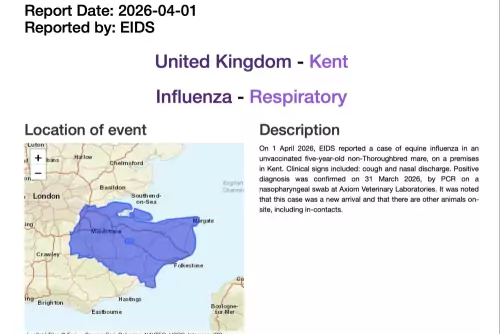
Please be advised that two cases of Equine Influenza have been confirmed in Kent this week, and other cases have been confirmed elsewhere. The affected yards are currently in lockdown.
What is it? What are the clinical signs?
Equine flu is an infectious disease which affects the upper respiratory tract of horses. There have been frequent outbreaks in the UK in recent years.
Clinical signs usually appear within 1–5 days of exposure to the flu virus and they can last for 3–6 weeks. Signs can include a high temperature, cough, nasal discharge, enlarged glands (under the lower jaw), conjunctivitis, depression, loss of appetite and filling of the lower limbs.
How is it spread?
Like human flu, equine flu is very contagious. It spreads rapidly with the virus being released into the atmosphere as droplets by infected animals coughing. The virus can spread over longer distances than some other diseases, so any infected animal needs to be isolated by 100m to distance to reduce the risk of airborne spread.
The flu virus can also live on surfaces, objects and peoples’ clothing that have been contaminated by these droplets. Using disinfectants, keeping separate sets of equipment, and changing clothing between yards can help to manage the risk of spread in this way.
We strongly recommend ensuring vaccinations are up to date to help reduce the risk of spread.
Vaccination:
Vaccination is crucial for flu prevention. The disease is often introduced on to a premises by a non-vaccinated horse as happened in the case diagnosed by the BELL team this week.
Advice : Horses should be vaccinated at least annually and more so if there is a risk, for instance, many competition horses are vaccinated more frequently. If over 70% of the country’s horses were vaccinated, flu would not be able to get a foothold because of a process called “herd immunity” and this is why it is very important that ALL our horses are vaccinated, whether or not they go anywhere. Vaccines are effective, despite what you may hear to the contrary.
At the moment less than 40% of the UK’s horse are vaccinated. Any unvaccinated horse could be contributing to the spread of this disease, and you could be putting his or her health at risk as well as the other in-contact horses .
Prevention
Maintaining good hygiene on your yard can help to prevent the spread of equine flu. This includes:
- Regular vaccination
- Taking your horse’s temperature regularly so that you can tell when it is higher than normal
- Isolating all new horses
- Disinfecting vehicles and ensuring horses do not share hay nets, feed bowls, and other equipment.
Having a yard health plan for everyone to follow will reduce the risk of equine flu and other infectious diseases being introduced to the premises, and good hygiene can minimise the risk of infections being spread between horses.